What happens when technology moves from being a farming tool to becoming part of a country’s agricultural infrastructure?
Agriculture is entering a period in which decisions that were once made primarily from experience and observation are increasingly being supported by data.
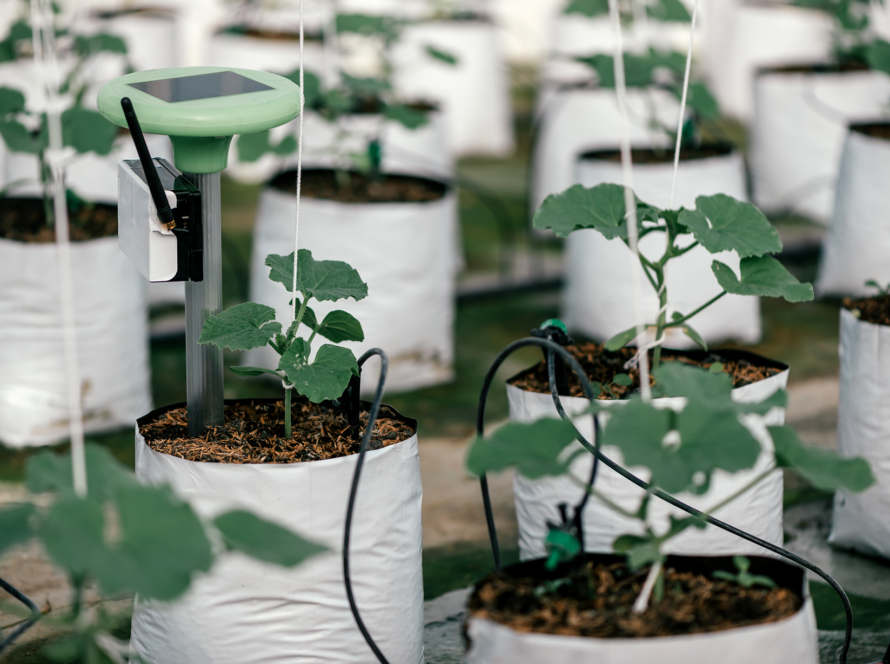
Satellite imagery can map cultivated areas. Sensors can measure soil conditions. Weather stations can capture microclimatic changes. Artificial intelligence can identify patterns across thousands of fields and generate forecasts that would be difficult to produce manually.
The opportunity is enormous.
But as agricultural technology becomes more sophisticated, another question becomes increasingly important:
Who controls the technology, the data and the infrastructure on which these systems depend?
A recent development in Namibia illustrates why this question deserves serious attention.
Namibia terminated a US$2.4 million contract with US technology company 6th Grain Corporation for an AI-driven crop monitoring system. The project was designed to use artificial intelligence and satellite data to monitor staple crops and provide crop maps, forecasts and drought-risk assessments. It also included a geo-tagged farmer survey database and skills transfer to Namibia’s agriculture ministry.
The project subsequently became the subject of controversy surrounding procurement procedures, data sovereignty and the involvement of a foreign company in an area closely connected to national food security.
Whatever one’s position on the specific case, there is a broader lesson here for countries investing in digital agriculture.
Agricultural technology is no longer simply about technology
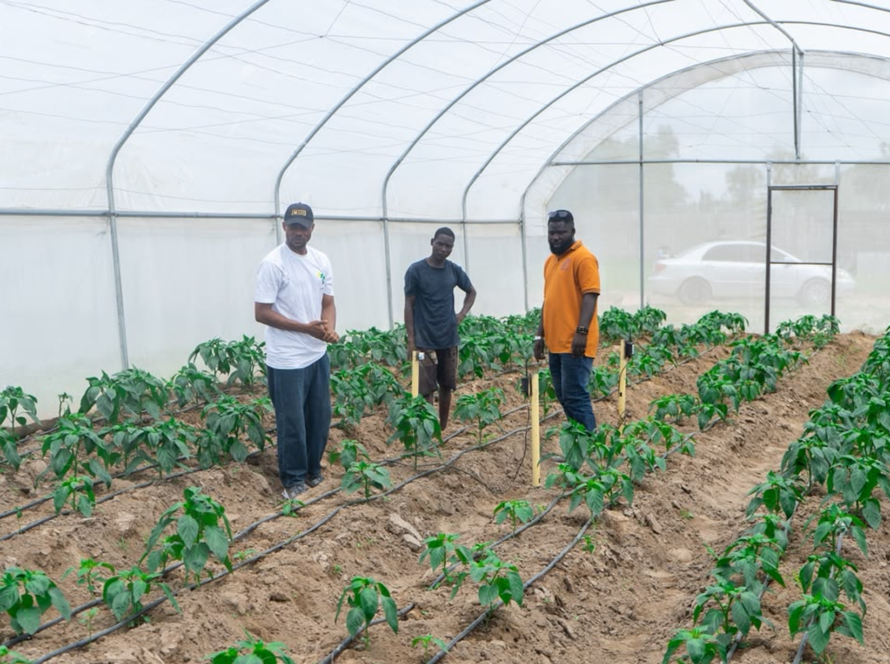
When a farmer installs a soil-moisture sensor, the immediate question is relatively straightforward:
Can this sensor provide useful information?
But when a government deploys a national agricultural monitoring system, the questions become much bigger.
- Who owns the data?
- Where is the data stored?
- Who can access it?
- What happens when the contract ends?
- Can the government continue operating the system without the original technology provider?
- Can local institutions modify or integrate the technology?
And perhaps most importantly:
Does the country have the technical and institutional capacity to understand and govern the system it is deploying?
These are not merely technical questions.
They are questions of policy, institutional capacity and national resilience.
The next stage of digital agriculture must include local capacity
There is a tendency to think about agricultural technology adoption primarily in terms of hardware and software.
- Buy the sensors.
- Deploy the satellites.
- Build the platform.
- Train the users.
- But sustainable digital agriculture requires something deeper: capacity.
A successful system should leave behind more than a functioning dashboard.
It should strengthen the ability of local researchers, agricultural institutions, governments, businesses and farmers to interpret information and make decisions from it.This is particularly important in emerging agricultural markets, where technology is often introduced through partnerships with international companies.
International expertise can accelerate innovation enormously. There is no reason countries should attempt to reinvent every component of modern agricultural technology.
The objective, however, should be partnership rather than dependency.
This is where the architecture matters
At PWR-FIT, our approach to agricultural technology is built around a simple principle: technology should help people make better agricultural decisions and it should be accessible, understandable and affordable.
Data becomes valuable when it can help a farmer, agribusiness, researcher, insurer, financial institution or policymaker answer a practical question.
- What is happening?
- Why is it happening?
- What is likely to happen next?
- And what should we do about it?
The long-term opportunity is to build systems that connect these layers rather than treating them as isolated technologies.
Africa’s digital agriculture opportunity requires trust
The Namibia case also highlights another issue that will become increasingly important: trust.
- Farmers are generating data.
- Businesses are generating data.
- Governments are collecting data.
- Technology companies are processing data.
As these datasets become more valuable, questions around consent, ownership, security, interoperability and sovereignty will become impossible to ignore.
A farmer should not have to understand cloud architecture to know what happens to the information generated on their farm.
A government should not have to choose between technological innovation and control over strategically important agricultural information.And technology providers should be expected to design systems that recognise these realities from the beginning.
The opportunity ahead
The real promise of digital agriculture is not simply that artificial intelligence can monitor more farms.
It is that better information can improve decisions throughout the agricultural value chain.
It can help farmers respond to crop stress earlier.
It can improve resource allocation.
It can strengthen agricultural planning.
It can support more sophisticated insurance and financing models.
It can improve the ability of governments to understand agricultural conditions at scale.
But achieving that potential requires more than importing technology.
It requires building systems that are technically capable, economically viable, institutionally sustainable and appropriate to the environments in which they operate.
That is the conversation we believe deserves greater attention.
The future of agricultural technology will not be determined solely by how powerful the algorithms become.
It will also be determined by who builds the systems, who governs them, who owns the data, who develops the capacity to operate them—and ultimately, who benefits from them.
At PWR-FIT, we intend to be part of building that future.