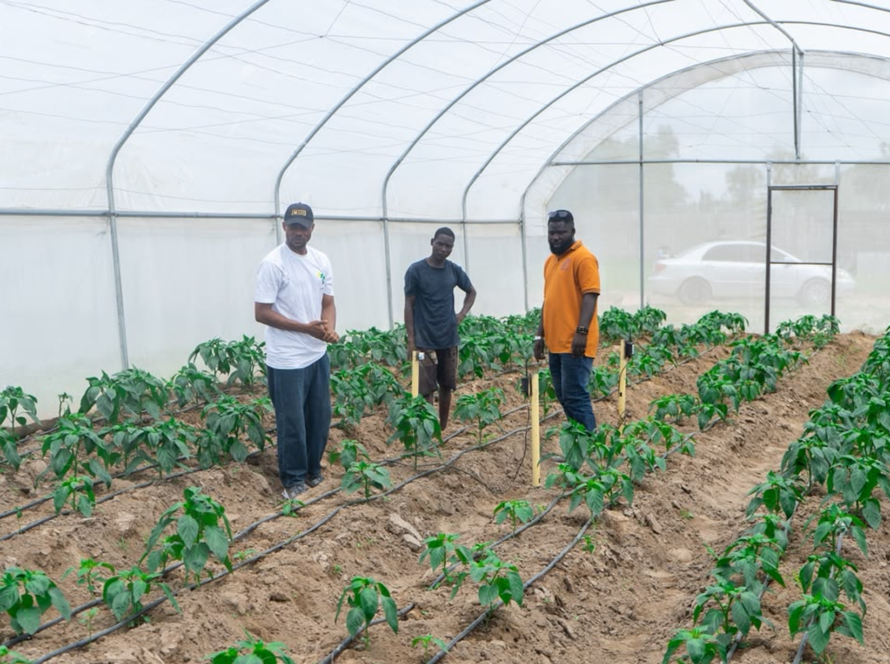
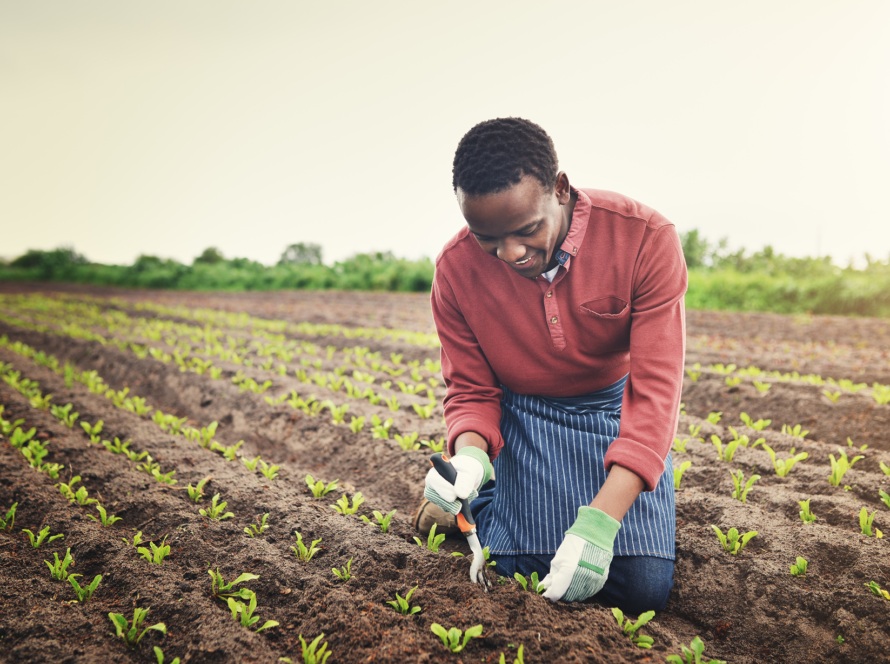
Agriculture in Africa does not suffer from a lack of activity.
Every day, millions of decisions are made across farms, cooperatives, agribusinesses, financial institutions, and government agencies. Farmers decide when to plant. Input suppliers decide where to distribute products. Processors estimate procurement volumes. Lenders evaluate risk. Policymakers allocate resources.
The challenge is that many of these decisions are made with limited visibility, incomplete information, or assumptions that may no longer reflect reality.
In recent years, significant attention has been given to agricultural data collection. Sensors monitor soil conditions. Satellites capture crop health. Weather stations generate forecasts. Digital platforms record transactions and farm activities.
This is an important step forward.
But collecting data is not the destination.
It is the starting point.
The real value of agricultural data emerges when it improves decisions.
As African agriculture becomes increasingly exposed to climate volatility, market uncertainty, and resource constraints, the next frontier is not simply generating more information. It is building the systems that transform information into action.
This article explores why decision intelligence may become one of the most important drivers of productivity, resilience, and growth in African agriculture.
THE DECISION GAP
Agriculture generates data continuously.
Rainfall patterns change.
Soil conditions fluctuate.
Input prices rise and fall.
Market demand shifts.
Pests emerge.
Transportation routes become congested.
The problem is rarely the absence of signals.
The problem is translating those signals into practical decisions.
Consider a maize farmer receiving a weather forecast predicting reduced rainfall over the next two weeks.
The forecast itself has value.
But the critical question is:
What should the farmer do differently because of that information?
Should irrigation schedules change?
Should fertilizer application be adjusted?
Should planting be delayed?
Should additional risk mitigation measures be implemented?
Without answers to these questions, information remains passive.
And passive information rarely changes outcomes.
Across the agricultural value chain, this gap appears repeatedly:
- Farmers collect observations but struggle to interpret them.
- Agribusinesses maintain records but lack operational insights.
- Cooperatives gather farmer data without predictive capabilities.
- Financial institutions possess fragmented information that cannot adequately quantify risk.
- Policymakers receive reports long after decisions should have been made.
In many cases, agriculture is not constrained by data scarcity.
It is constrained by decision scarcity.
FROM INFORMATION TO INTELLIGENCE
The transformation from data to decisions requires an intermediate layer.
An intelligence layer.
This layer does not simply store information.
It analyzes it.
Connects it.
Interprets it.
And translates it into recommended actions.
Instead of asking:
“What happened?”
Decision systems answer:
“What is happening?”
“What is likely to happen next?”
“What action should be taken now?”
This shift fundamentally changes how agricultural systems operate.
Rather than reacting to problems after losses occur, stakeholders can anticipate risks before they escalate.
Rather than relying solely on experience and intuition, decisions become evidence-based and measurable.
Agriculture becomes more predictable, more efficient, and more resilient.
THE POWER OF TIMELY DECISIONS
In agriculture, timing often matters as much as the decision itself.
A fertilizer recommendation delivered three weeks late may have little impact.
A pest alert issued after an outbreak has spread may be ineffective.
A weather warning received after a flood event is no longer useful.
The value of information depends on its ability to influence decisions before outcomes become irreversible.
When intelligence systems operate in real time, they enable stakeholders to:
- Optimize irrigation schedules
- Adjust planting windows
- Improve input application timing
- Detect crop stress earlier
- Respond faster to disease outbreaks
- Improve harvesting and storage planning
- Reduce waste across operations
Small improvements in decision quality, repeated consistently throughout a season, often generate significant gains in productivity and profitability.
Agricultural transformation is rarely the result of a single breakthrough.
More often, it is the cumulative effect of thousands of better decisions.
DECISION INTELLIGENCE ACROSS THE VALUE CHAIN
The impact of decision systems extends far beyond individual farms.
For Farmers
Decision support can help determine:
- When to plant
- How much water to apply
- When to apply fertilizer
- Which risks require immediate attention
- When to harvest for maximum value
These insights reduce uncertainty while improving productivity and resource efficiency.
For Agribusinesses
Operational intelligence can improve:
- Production planning
- Procurement forecasting
- Inventory management
- Supply chain coordination
- Resource allocation
Organizations gain greater visibility into performance and emerging risks before they affect operations.
For Financial Institutions
Agricultural lending has historically been constrained by uncertainty.
Decision intelligence enables lenders to evaluate:
- Farm performance trends
- Production risks
- Climate exposure
- Yield forecasts
- Repayment capacity
Better information creates better lending decisions.
And better lending decisions improve access to capital.
For Governments and Development Partners
Reliable intelligence supports:
- Evidence-based policymaking
- Program targeting
- Food security planning
- Climate adaptation strategies
- Resource prioritization
The result is more effective interventions and improved public outcomes.
BUILDING RESILIENCE IN AN UNCERTAIN CLIMATE
Climate variability is introducing unprecedented uncertainty into agricultural systems.
Rainfall patterns are becoming less predictable.
Heat stress events are increasing.
Floods and droughts are occurring with greater frequency and intensity.
In this environment, decision-making becomes increasingly important.
Resilience is not simply the ability to recover from shocks.
It is the ability to anticipate them.
Decision intelligence supports resilience by helping stakeholders:
- Monitor environmental conditions continuously
- Detect anomalies early
- Evaluate potential scenarios
- Implement adaptive responses
- Allocate resources more effectively
The faster risks can be identified, the greater the opportunity to reduce their impact.
In a changing climate, intelligence becomes a critical adaptation tool.
WHY AI MATTERS
Artificial Intelligence is often discussed as a future technology.
In agriculture, its most practical role may be much simpler.
AI helps convert large volumes of complex agricultural data into understandable recommendations.
Instead of requiring farmers or managers to interpret hundreds of variables manually, intelligent systems can identify patterns and highlight actionable insights.
This includes:
- Predicting production outcomes
- Detecting anomalies
- Identifying emerging risks
- Generating recommendations
- Improving forecasting accuracy
Importantly, the objective is not to replace human judgment.
It is to enhance it.
The most effective agricultural systems combine local expertise with machine intelligence.
Technology provides insight.
Humans provide context.
Together they improve decisions.
CHALLENGES TO SCALING DECISION SYSTEMS
Building decision intelligence at scale is not without challenges.
Several barriers remain:
- Fragmented agricultural data sources
- Limited digital infrastructure in rural areas
- Inconsistent data quality
- Low interoperability between platforms
- Digital literacy constraints
- Trust and data ownership concerns
Addressing these challenges requires collaboration across the ecosystem.
Technology providers, governments, financial institutions, research organizations, agribusinesses, and farmers must work together to create trusted and accessible intelligence systems.
The goal is not simply digitization.
It is meaningful decision support.
THE NEXT EVOLUTION OF AFRICAN AGRICULTURE
The conversation around agricultural transformation is evolving.
The first challenge was connectivity.
The second was data collection.
The next challenge is decision-making.
Success will increasingly depend on how effectively agricultural stakeholders transform information into action.
The organizations that thrive will not necessarily be those with the largest datasets.
They will be those capable of generating the clearest insights and enabling the best decisions.
Agriculture is becoming an intelligence-driven industry.
Data remains essential.
But data alone does not create value.
Decisions do.
And the future of African agriculture may ultimately be determined by how effectively we convert information into action, uncertainty into insight, and data into decisions.
At PWR-FIT, we believe agricultural transformation requires more than visibility. Through EquipIQ, we capture critical operational and environmental data. Through ProcessIQ, we transform that data into actionable intelligence that helps farmers, agribusinesses, financial institutions, and policymakers make smarter, faster, and more confident decisions. Because the future of agriculture is not defined by data collection alone—it is defined by what we do with the data we collect.